A first-hand account of the #beReady program. What was the one-day survival training organized by the Ministry of Defence at the military unit in Leźnica Wielka like? Personal impressions, reflections, and an assessment of the initiative.
Table of Contents
From the Couch to the Military Base
I managed to get into the first group of about 65 people for a survival course organized as part of the new universal defense training program by the Ministry of Defence (MoD) – “#beReady”. The initiative aims to build social resilience and prepare civilians for crisis situations. The government has prepared four thematic modules:
- Medical Course (first aid and battlefield medicine)
- Survival Course (survival and civil protection)
- Basic Security Course (civil and home defense)
- Cyber Hygiene Course (digital security)
Registration through the mObywatel application was instantaneous. After a few clicks and a few hours of waiting, I received a confirmation of my qualification.
The Day of the Trial: Journey and First Impressions
The course was scheduled for Saturday, November 29. The day before, I received a e-mail message reminding me about the difficult weather conditions and the need to bring a thermos with tea. a nice gesture that turned out to be prophetic. Many participants, complete amateurs, were not properly dressed for the sub-zero temperatures and snow.
At 6 a.m., after walking the dog and having a quick breakfast, I set off on a 60-kilometer journey to the Military Unit in Leźnica Wielka. This is where the 1st Air Cavalry Battalion and the 1st Air Division are stationed, both part of the 25th Air Cavalry Brigade.
I arrived ahead of time. The procedures were efficient: signing a declaration, getting accident insurance, and picking up a pass. Divided into groups of 15 under the care of a leading officer, we waited on the parade ground. At 8:00 a.m., at -2°C, the unit commander himself greeted us. I was pleasantly surprised by the range of participants: from young people to older individuals aged 40-50. The course was truly for everyone.
The Training: Between Knowledge and Morale Building
Although I have an amateur interest in survival and prepping, the course was a valuable opportunity for me to systematize my knowledge. The instructors repeatedly emphasized turning off phones and strictly forbade taking pictures.
I believe this is not just training in practical skills, but also an important tool for building morale. It’s a signal to the soldiers that civilians, contrary to media narratives, do not intend to run away and cause problems. This isn’t about a naive belief that amateurs, after a weekend course, will be able to help the army in its tasks, but rather that by having their own competencies, they will be less of a hindrance and, at a micro-level, support the organization of society in times of crisis. For me, someone completely unrelated to the military, it was also an experience that debunked stereotypes. The army is served by true professionals who have dedicated their lives to it and genuinely risk them to defend our country.
At the training, I met a member of parliament from the Civic Coalition (KO), Marcin Józefaciuk, people fascinated by militaria, but above all – ordinary citizens. In a polarized society, such initiatives that unite rather than divide are worth their weight in gold.
A Small Snag in the Digital World
Unfortunately, not everyone respected the rules. The MP, despite repeated requests for a strict ban on taking photos and the requirement to turn off his phone, decided to break the regulations. This is uncool behavior that undermines the authority of the organizers and shows a lack of respect for the other participants.
To już trzecie szkolenie w ramach dobrowolnych szkoleń obronnych #wGotowości.
— Marcin Józefaciuk (@M_Jozefaciuk) November 29, 2025
Tym razem moduł "przetrwanie" w 1 Batalionie Kawalerii Powietrznej w Leźnicy Wielkiej
✔️ Przygotowanie siebie i domu na czas kryzysu
✔️ Sygnały alarmowe
✔️ Gaszenie pożarów
✔️ Pierwsza pomoc
✔️… pic.twitter.com/Od6c2b50u6
The Greatest Value: Breaking Out of Bubbles
What struck me most was the constant repetition that in a crisis situation, assessment based on reliable sources of information is key, not reports from social media. The instructors explicitly called Facebook an unreliable source of information. However, this was somewhat at odds with the fact that the military unit uses Facebook to communicate about the event. As someone who doesn’t use this platform, I have no way of freely browsing the materials published there. Maybe it’s time for the military to rethink its content distribution channels?
I would like to see more integrative and practical elements in the future. This would allow people from different social bubbles to see that we are not enemies to each other, but that social media is just artificially winding us up.
Key Skills: What I Gained from the Training
The training was much richer in content than one might expect from a single-day course. It began with an extensive module on terrain navigation, to which a significant amount of time was dedicated, including a practical component. We learned the principles used by the military and emergency services, how to operate basic navigation tools, pinpoint our location, and avoid common mistakes when moving cross-country, even drawing on methods used by rangers.
Subsequent modules covered key survival techniques: starting a fire, sourcing and purifying water, and building temporary shelters. Importantly, all these elements were linked to the practical philosophy of a “bug-out bag.” It was emphasized that this shouldn’t be a pre-packaged product, but a kit tailored to one’s own skills and needs, aimed at enabling survival for several days with minimal energy expenditure. The focus was on simplicity and equipment redundancy, which is incredibly valuable knowledge in an era where fear of crisis is often monetized and the market is flooded with unnecessary gadgets.
The program also covered a wide of civil defense topics: locating shelters, the types and meanings of alarm signals, the rules of conduct during a bombardment, the basics of medical rescue, and firefighting.
The Icing on the Cake: The Wind Tunnel
Even though my basement resembles a survival gear warehouse, after the course, I still ordered a few small things for my “bug-out bag,” which I am assembling more as a formality.
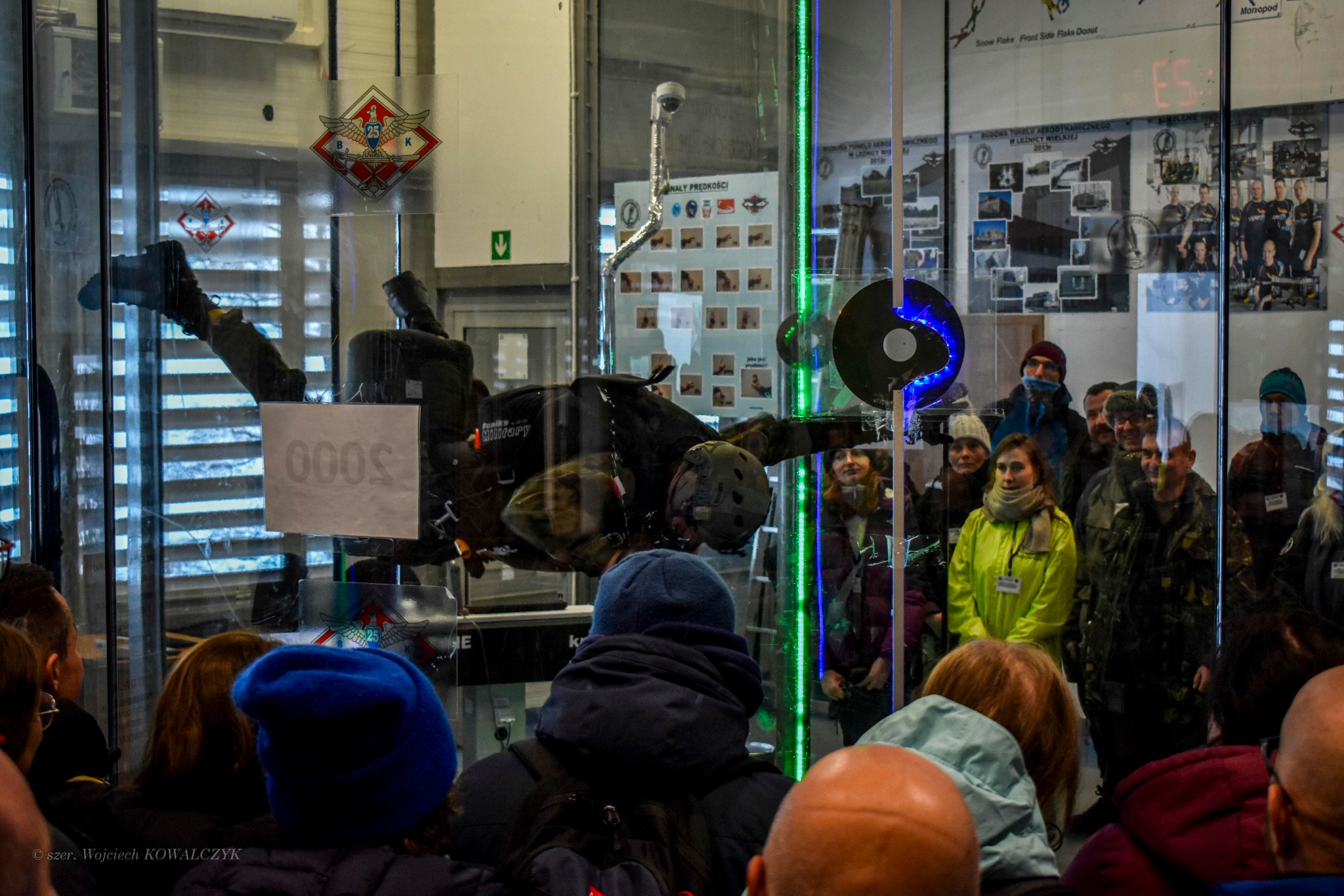
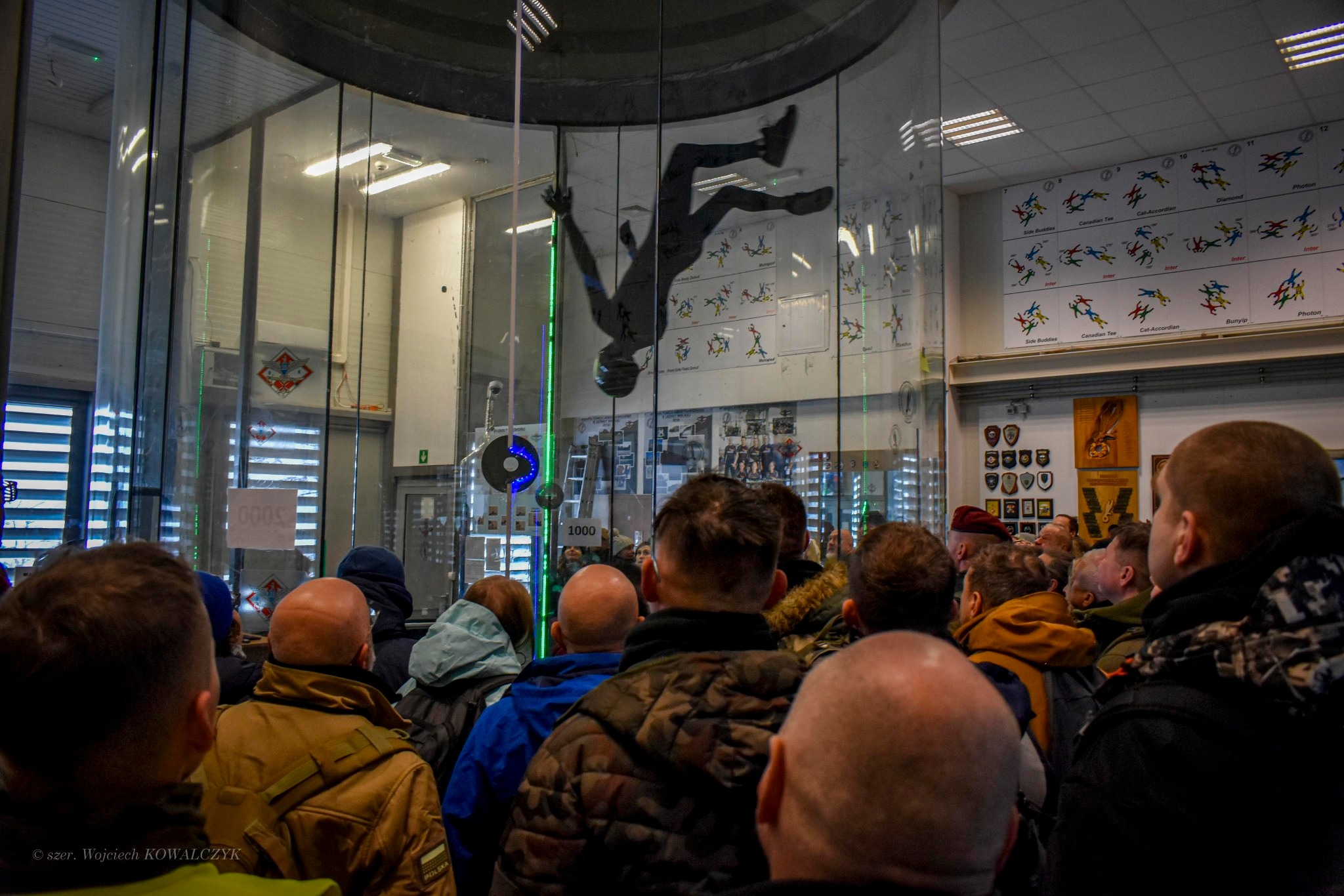
The most impressive part for me was the demonstration of the wind tunnel – the only and most modern military facility of its type in the European Union, the construction of which was initiated during the PO-PSL coalition government (the topping out was in 2013). We saw a simulation of a parachute jump by a soldier in full gear. This facility not only increases safety and reduces training costs but also allows for night jump training with night vision for special forces. The professionalism of the organizers and the potential of this place were impressive.
Summary and Appeal
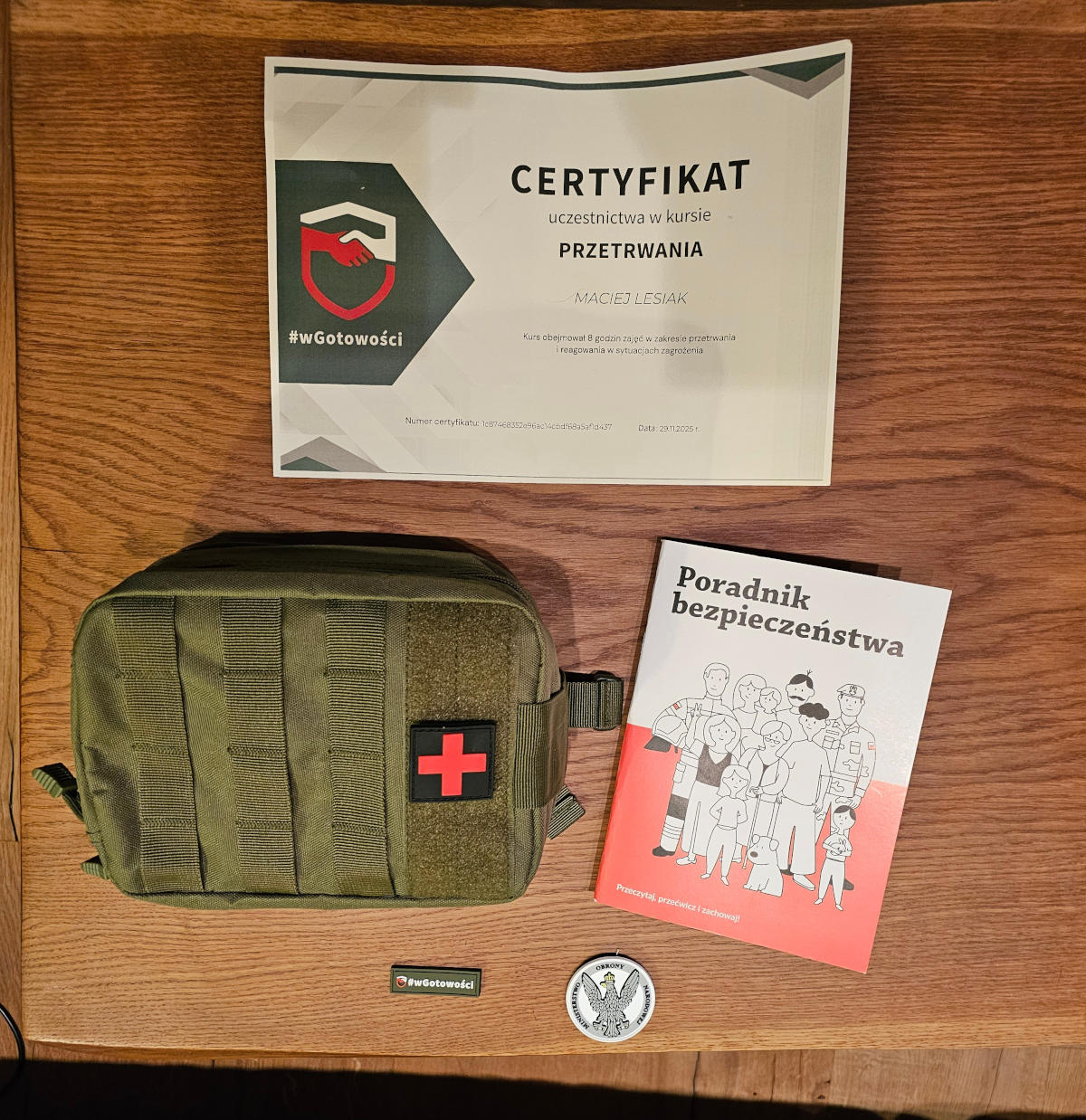
At the end of the course, each of us received a certificate, an individual military first aid kit, and an MoD booklet with advice for times of crisis. The brochure, although brief and cursory, is, in my opinion, excellently written – it hits the mark, considering people’s reluctance to read. Interestingly, during the medical training, one person fainted, so the “survival” certificate took on a very real dimension for some.
Once again, I thank the soldiers from the Leźnica Wielka Military Unit for their time and professionalism. With a clear conscience, I urge everyone to sign up for the “#beReady” course. It is a truly eye-opening experience.
Disclaimer: Many things I saw and would like to talk about remain, out of respect for the soldiers and security principles, covered by a “need to know” strategy. This also involves certain limitations in documenting the course, which is fully understandable from a security point of view.
Addendum: The Absurdity of Openness in an Era of Hybrid Warfare
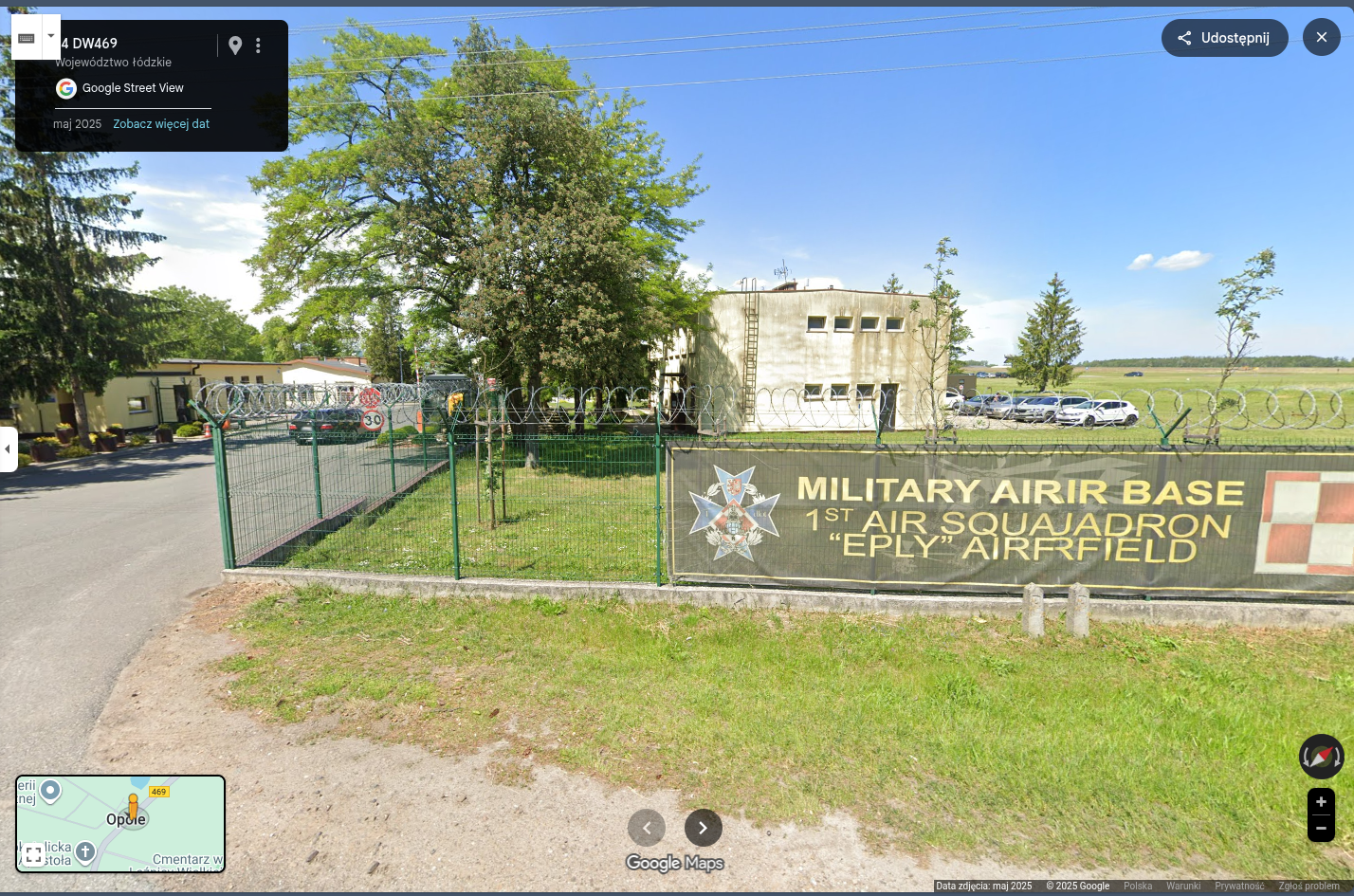
I simply don’t understand why all these photography bans and phone restrictions are being introduced when, from the comfort of your couch, you can not only view the base on Google Street View but also virtually drive along dirt roads right up to the gate with its “no photography” sign, inspect the drainage ditches to the south, and examine various buildings from every angle. All thanks to Street View.
Isn’t it a grim joke that in an age of hybrid warfare, amateur saboteurs are recruited via Telegram, and their reconnaissance is made easier by allowing them to plan everything from their couch?
Perhaps a decision-maker will read this article and consider whether the time has come to “black out” a 10-20 km radius around strategic facilities like airfields on Street View. This isn’t about completely stopping professionals – they will find a way regardless. It’s about making life more difficult for amateurs. Forcing them to physically show up on-site to plan their actions creates a window of opportunity for our security services to react. Just a final thought.